

Structured digital employee governance prevents operational bottlenecks by establishing clear boundaries and automated protocols for human-AI escalation. By defining precise handoff thresholds within hybrid workforce operations, enterprises ensure complex edge cases seamlessly transition to human experts without stalling core business workflows or introducing compliance risks.
What is Digital Employee Governance?
As enterprises transition From Website to Web Agent, they are shifting from passive copilots to active digital employees that execute complex business intent rather than rigid, deterministic scripts. According to recent McKinsey data, 23% of organizations are already scaling agentic AI in at least one business function, and 39% are actively experimenting with autonomous web agents to manage multi-step workflows.
This paradigm shift demands robust digital employee governance. Much like human staff, autonomous agents require structured accountability frameworks, unique execution credentials, and strict data boundaries. By organizing data with Smart Tags, organizations can govern exactly which files, pages, and systems an agent can access, ensuring complete operational safety and alignment with corporate goals.
Why is Human-AI Escalation Critical for Hybrid Workforce Operations?
Modern hybrid workforce operations thrive on a structured Human-AI Handshake, where autonomous agents handle the initial 80% of data synthesis and routine tasks, leaving human experts to act as final validators. However, when an agent encounters ambiguity or a high-risk decision, a seamless human-AI escalation path is vital to prevent costly bottlenecks.
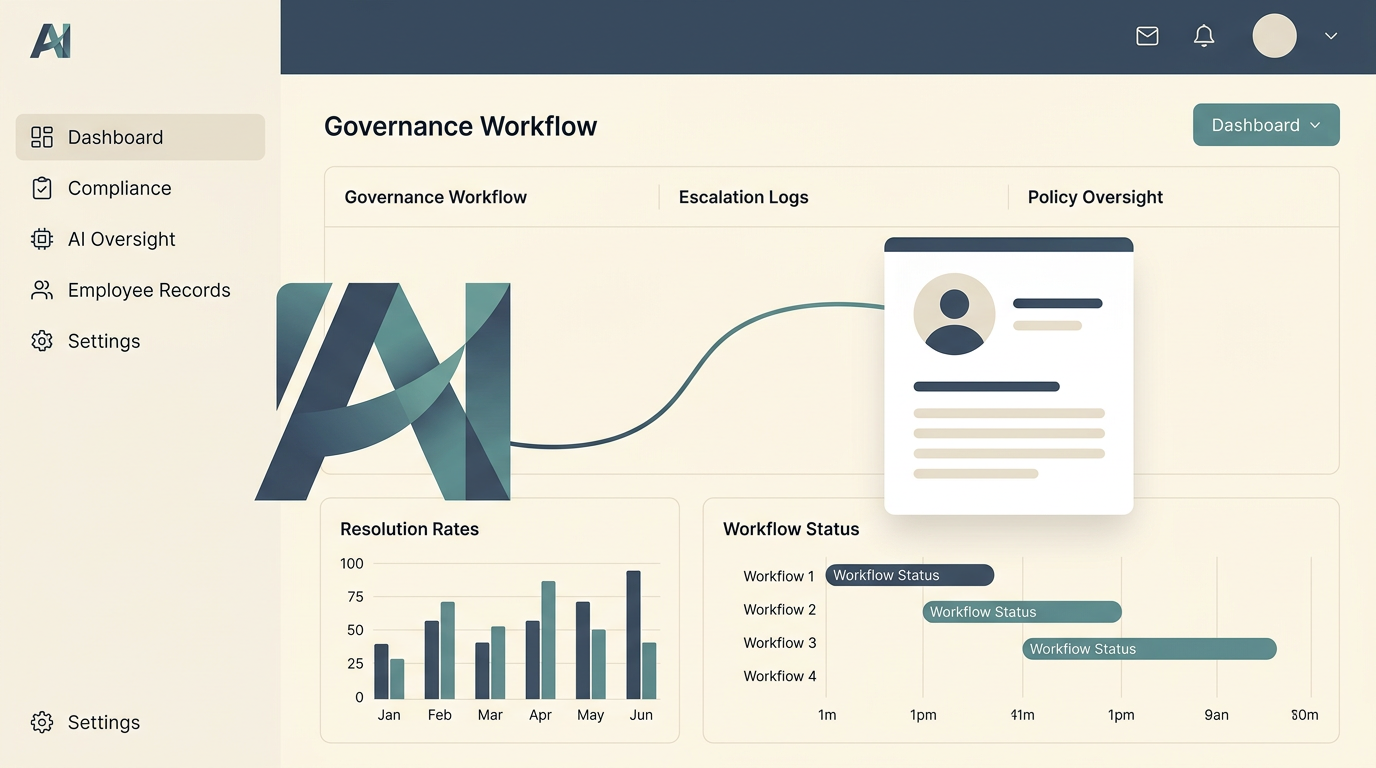
When an agent’s confidence threshold drops, it must execute an immediate, context-rich handover. By following the protocols in our WP Plugin: Operations Guide, administrators can set specific escalation triggers. This ensures that the digital employee hands off the conversation or task to a human specialist, complete with an auditable trail of its reasoning and actions, maintaining uninterrupted operational momentum.
Securing the Hybrid Workforce with Zero Trust and Compliance
In highly regulated industries, governance systems must make human oversight visible and auditable. To comply with frameworks like the EU AI Act and DORA, enterprises must implement Zero Trust principles, specifically ‘Least Privilege for Agents’. This restricts a digital employee’s access to specific Smart Data vaults, expiring permissions automatically. Managing these boundaries through granular User Permissions ensures that every autonomous action remains fully compliant, secure, and aligned with enterprise standards.
Governed Human-AI Escalation Workflow
Choose Your Platform Mode
Start free with the local Core Framework or unlock cloud AI Web Agents to automate your digital operations.
Core Mode
Offline-capable building engine for WordPress developers, freelancers, and agencies.
Smart Cloud
Connect your website to the CTS Cloud to unlock vector storage, reCAPTCHA, and Smart Data.
Web Agents
Unlock autonomous AI Web Agents to drive visitor interactions, content publishing, and sales.