
Workspace Restructuring for Neurodivergent Employee Success
Workspace restructuring combining cognitive-friendly workplace design and digital workspace accessibility directly drives modern organizational performance by removing sensory barriers. Optimizing physical environments and digital platforms successfully unlocks the potential of the neurodivergent workforce, representing up to twenty percent of employees, boosting productivity, innovation, and retention.
What is a cognitive-friendly workplace?
A cognitive-friendly workplace is an environment designed to support diverse neurological processing styles, including ADHD, autism, dyslexia, and other neurodivergent conditions. Rather than forcing employees to adapt to a rigid, highly stimulating environment, a cognitive-friendly workplace adapts to the user. This design philosophy recognizes that sensory elements like noise levels, adjustable lighting, thermal comfort, clean air quality, and minimized visual complexity are not optional perks; they are functional requirements. By prioritizing these elements, organizations create a workspace where all employees can maintain focus, reduce cognitive fatigue, and perform at their highest potential.
How does physical layout impact sensory processing?
Traditional open-plan offices present significant barriers to productivity due to persistent acoustic and visual distractions. For the 15% to 20% of the global workforce that is neurodivergent, constant exposure to background conversations and unstructured movement can lead to sensory overload. To mitigate this, modern office layout design is shifting toward “spatial autonomy” and “activity-based zoning.”
Implementing Activity-Based Zoning
Activity-based zoning replaces static, uniform seating with a gradient of environments tailored to different sensory and cognitive tasks. This layered landscape typically includes:
- Social and Collaborative Hubs: Designated areas for team brainstorming, active communication, and social interaction, positioned away from quiet focus zones.
- Semi-Private Workspaces: Shared areas equipped with visual screening and moderate acoustic dampening, suitable for routine administrative tasks.
- Quiet Focus Zones: Fully quiet, low-stimulation environments where visual clutter is minimized, allowing for deep cognitive work. Access to these zones significantly improves productivity for 85% of employees, according to research from the International Workplace Group.
Acoustic-First Design Principles
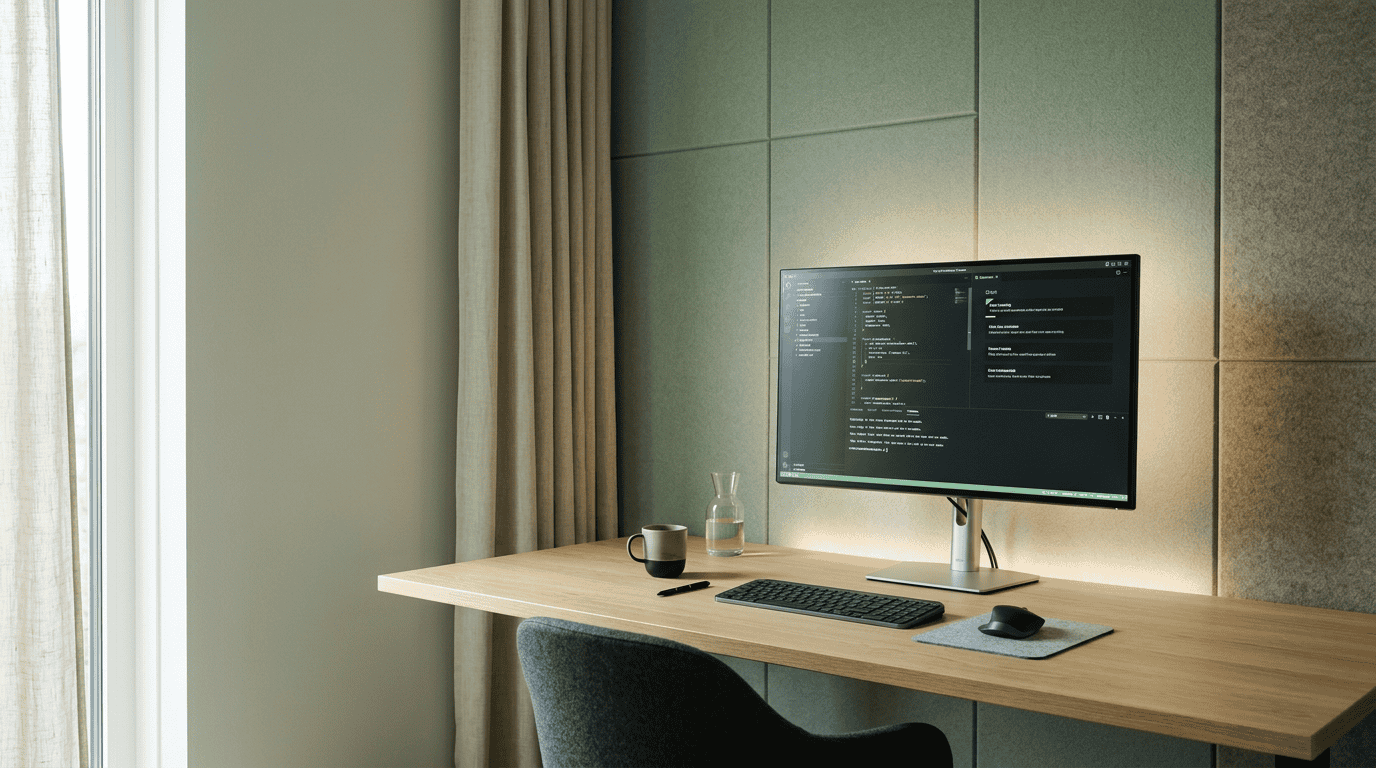
Managing sound bleed is critical in a sensory-friendly layout. Modern acoustic-first design integrates sound-absorbing materials such as felt baffles, timber grids, and fabric-wrapped panels directly into the structural architecture. These materials reduce reverberation and create natural acoustic boundaries without isolating employees behind sterile, high-walled cubicles.
Why is digital workspace accessibility essential?
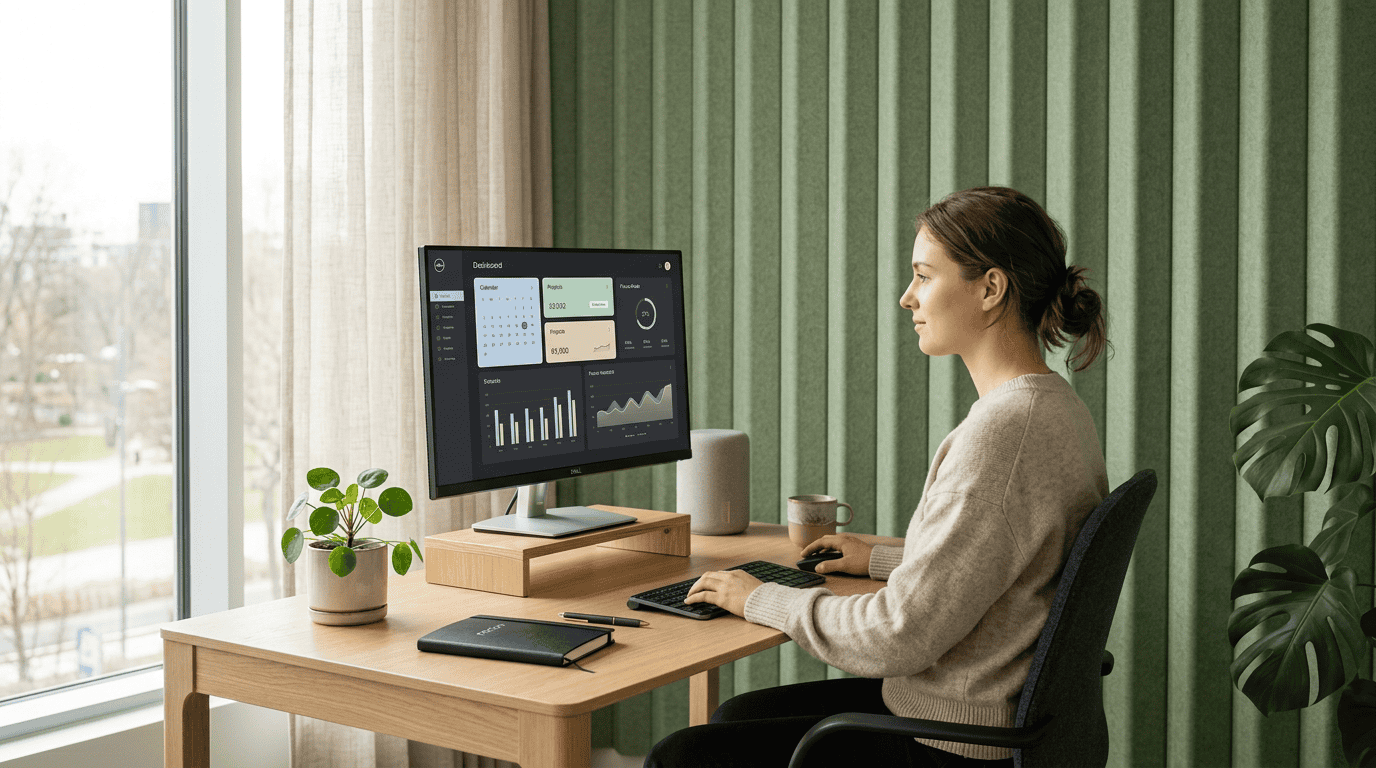
Physical workspace restructuring is only half of the equation; modern employees spend a significant portion of their workday navigating digital environments. If software interfaces are cluttered, unpredictable, or difficult to navigate, they can cause the same cognitive fatigue as a noisy physical office. True workplace inclusivity requires aligning physical design with digital workspace accessibility.
Organizations can achieve this digital alignment by building structured, intuitive internal tools. For instance, using modular layout builders like Smart Layouts and Smart Views allows companies to establish clean, consistent, and distraction-free user interfaces. By securing data layers with strict User Permissions and classifying information with Smart Tags, employees can access the exact resources they need without cognitive overwhelm. Furthermore, integrating intelligent web agents, such as a custom-trained Chat Agent, provides employees with an accessible, natural-language interface to query internal Smart Data, bypassing complex navigation paths and supporting diverse cognitive processing styles.
How do modular spaces optimize office budgets?
Restructuring an office to support neurodiversity does not require cost-prohibitive, permanent construction. Many organizations are turning to modular solutions, such as acoustic office pods, to create flexible focus areas and meeting rooms on demand. This modular approach offers substantial financial advantages.
According to research cited by CBRE, utilizing modular office pods instead of constructing permanent drywall meeting rooms could save companies approximately $30 billion globally by 2030. These pods can be easily relocated, reconfigured, or expanded as organizational needs change, providing immediate, cost-effective private spaces for calls and low-stimulation focus without the permanence or high capital expenditure of traditional construction.
How can organizations implement these changes?
To successfully transition to a neurodivergent-friendly workplace, organizations must move away from “wellbeing theatre”—such as adding token plants or isolated quiet rooms—and instead embed inclusive principles directly into the initial concept phase of their design processes.
A highly effective method is concept-phase biophilic design. This involves orienting floor plans to maximize natural light, selecting organic materials like wood and stone, and designing layouts that ensure employees have visual access to greenery from their primary work areas. When combined with thoughtful spatial zoning, acoustic mitigation, and accessible digital platforms, these physical and digital enhancements create a cohesive, high-performance ecosystem where every employee can thrive.
Implementing Cognitive-Friendly Workspace Design
Choose Your Platform Mode
Start free with the local Core Framework or unlock cloud AI Web Agents to automate your digital operations.
Core Mode
Offline-capable building engine for WordPress developers, freelancers, and agencies.
Smart Cloud
Connect your website to the CTS Cloud to unlock vector storage, reCAPTCHA, and Smart Data.
Web Agents
Unlock autonomous AI Web Agents to drive visitor interactions, content publishing, and sales.