
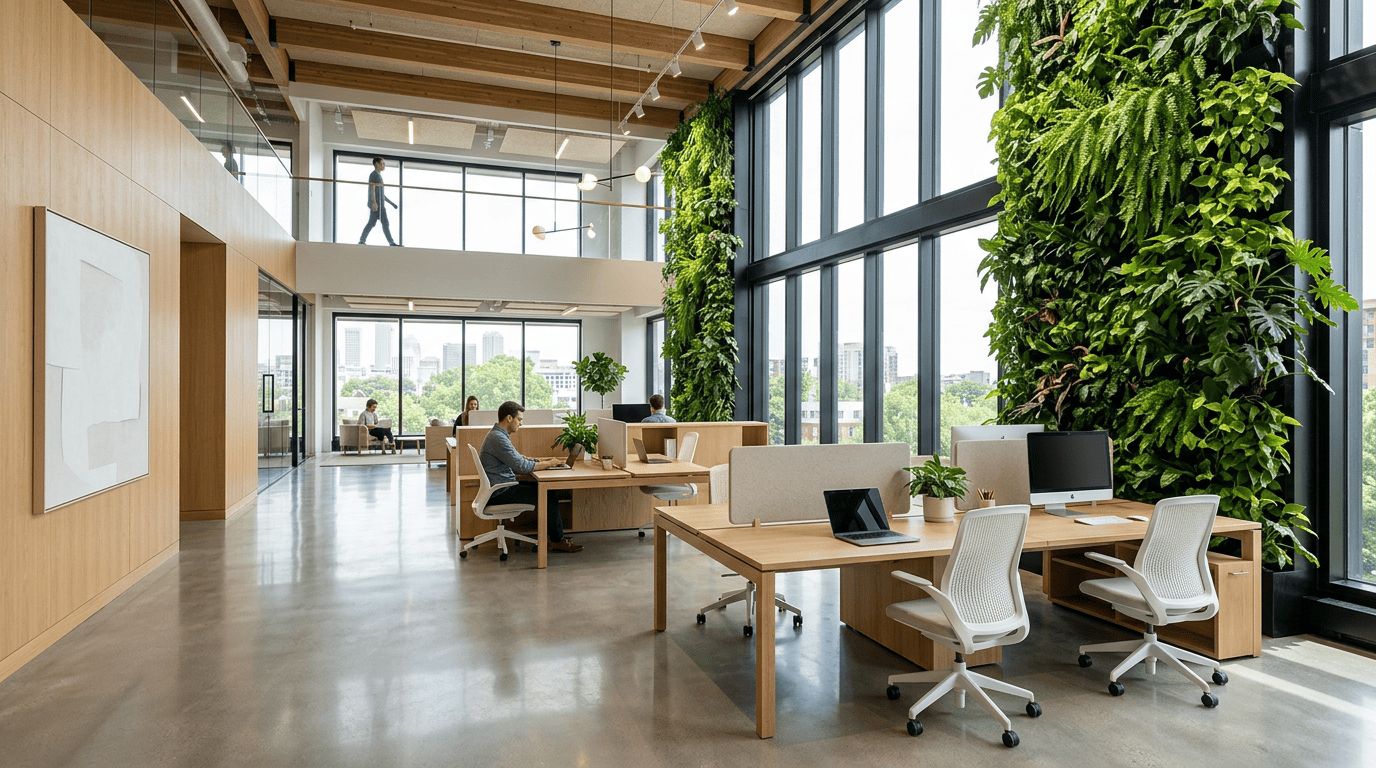
Green office restructuring leverages an eco friendly hybrid office model to naturally reduce carbon footprints by up to 40% when paired with smart building tech. By optimizing physical square footage and deploying AI-driven HVAC and lighting systems, organizations dramatically cut energy waste while fostering healthier, biophilic, and highly productive sustainable workspace design.
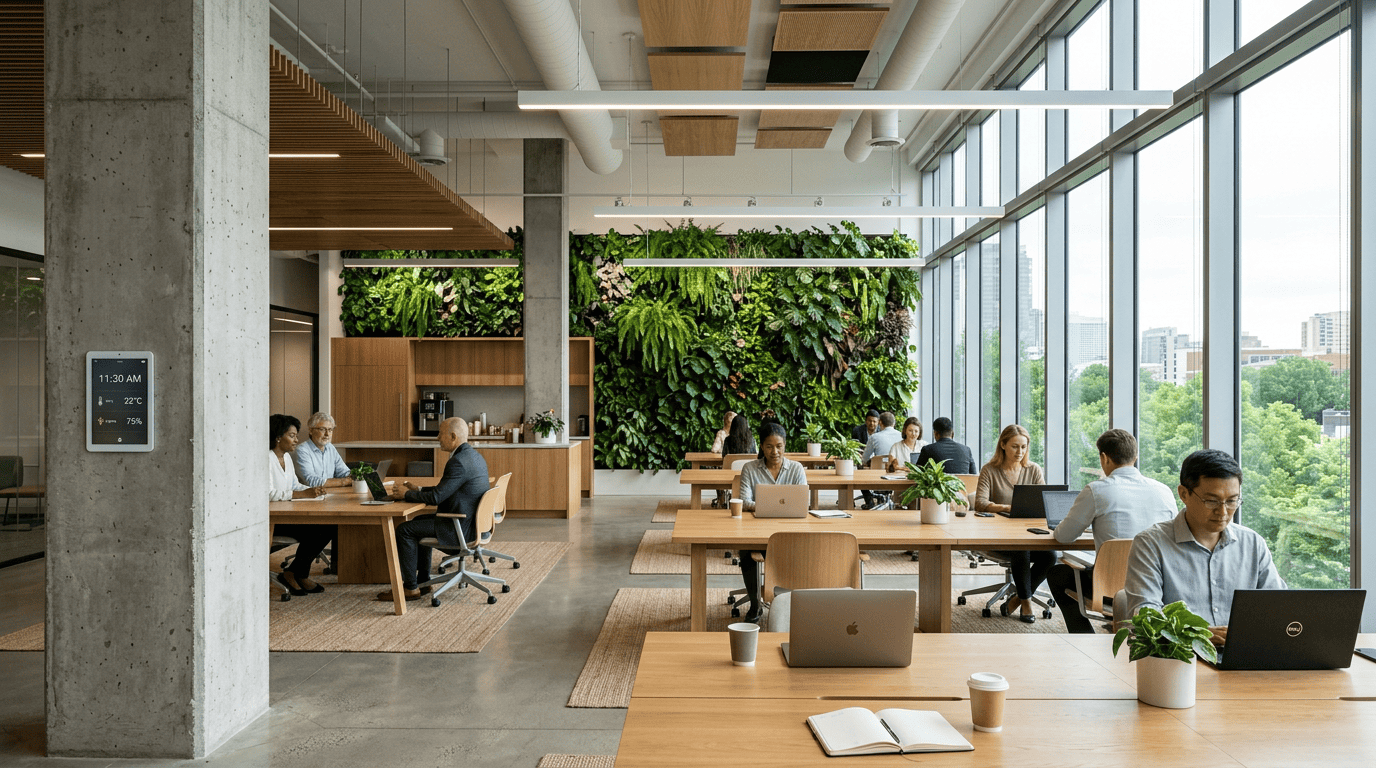
How Does Green Office Restructuring Reduce Carbon Footprints?
As organizations transition to flexible models, physical workspaces must adapt. A successful green office restructuring program addresses both operational efficiency and environmental health. Just as we emphasize resource efficiency and streamlined setups in our corporate vision, physical layouts must eliminate waste and optimize resource consumption.
By shifting to Activity-Based Working (ABW)—which replaces traditional, underutilized fixed desks with dynamic focus zones, collaboration lounges, and privacy pods—companies can shrink their physical real estate footprint. This structural consolidation directly translates to lower heating, cooling, and maintenance requirements, cutting overhead costs while minimizing environmental impact.
Maximizing Energy Savings with Smart HVAC and Lighting
Operational sustainability relies heavily on automated environmental management. When smart building tech is integrated into an eco friendly hybrid office, IoT sensors track real-time occupancy patterns. Rather than conditioning empty rooms, smart systems dynamically adjust energy output:
- AI-Driven HVAC Optimization: Intelligent climate controls reduce heating and cooling waste by 20% to 30% by adapting to actual room usage.
- Adaptive Lighting: Automated LED systems dim or shut down in unoccupied zones and harvest natural daylight to minimize electricity draw.
- First-Party Data Integration: Facility managers can monitor performance metrics to continuously refine operational schedules and meet strict standards for WELL, LEED, or BREEAM certifications.
Prioritizing Sustainable Materials and Circular Design
True sustainable workspace design extends beyond operational energy to the physical materials that make up the office environment. Modern restructuring efforts prioritize circular economy principles, ensuring that furniture and architectural features are designed for reuse, refurbishment, and eventual disassembly.
Incorporating renewable, high-performance materials such as bamboo, cork, and recycled plastics significantly lowers the embodied carbon of a corporate fit-out. Furthermore, integrating biophilic design elements—including indoor greenery, vertical gardens, and natural light sources—has been proven to boost employee productivity by 6% to 15% and creativity by up to 15%, proving that environmental responsibility directly supports human performance.
Transitioning to an Eco Friendly Hybrid Office
Choose Your Platform Mode
Start free with the local Core Framework or unlock cloud AI Web Agents to automate your digital operations.
Core Mode
Offline-capable building engine for WordPress developers, freelancers, and agencies.
Smart Cloud
Connect your website to the CTS Cloud to unlock vector storage, reCAPTCHA, and Smart Data.
Web Agents
Unlock autonomous AI Web Agents to drive visitor interactions, content publishing, and sales.