

Workspace Restructuring Strategy: Navigating Hybrid Shifts
Organizations successfully navigate cultural shifts during physical and hybrid transitions by aligning physical workspaces with human-centric mindsets, prioritizing outcome-based performance metrics over physical presence, and establishing structured communication norms. This balanced approach bridges the gap between physical office re-entry and remote operational trust.
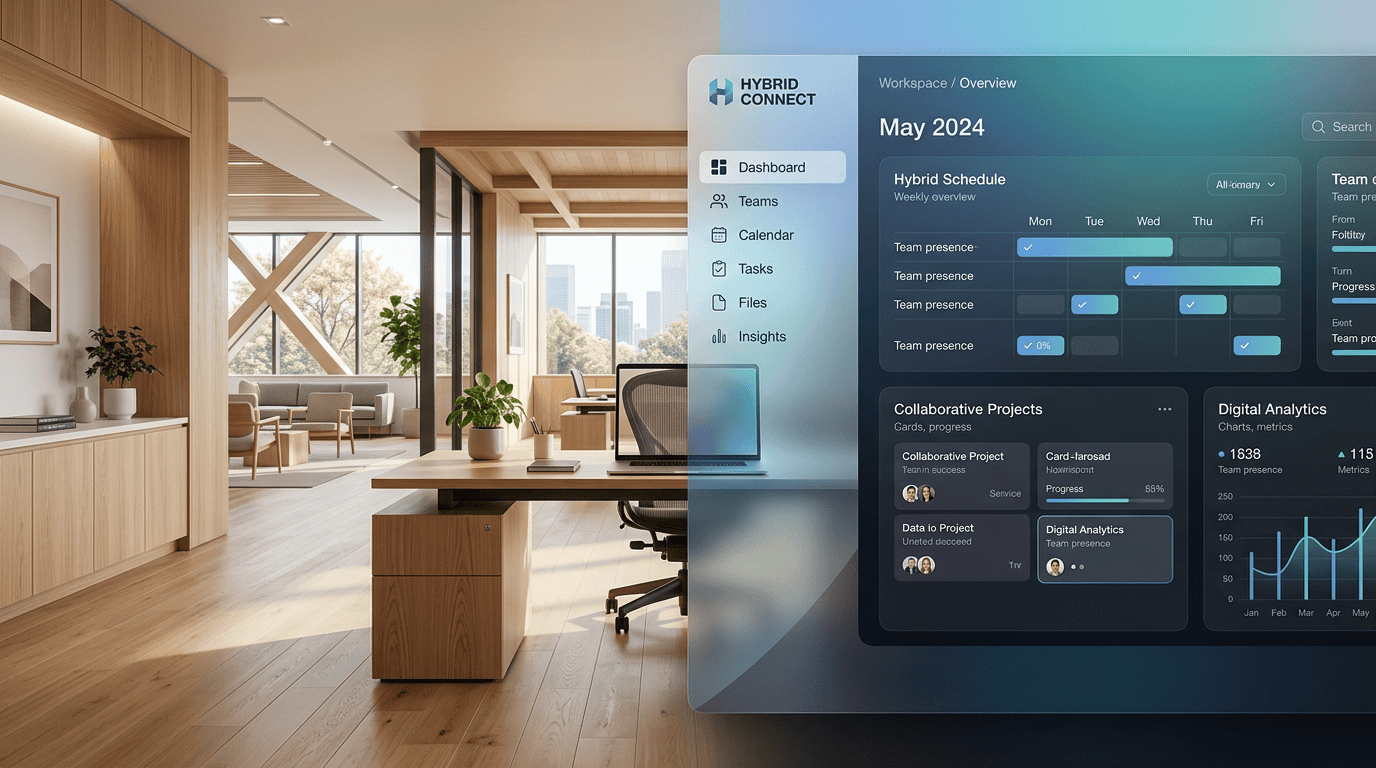
How Do We Execute Effective Workplace Change Management?
Successfully implementing a workspace restructuring strategy requires a rigorous approach to workplace change management. According to recent workforce distribution data, nearly 40% of employees work remotely in some capacity, with 27% operating in a structured hybrid setup, 12% fully working from home, and over 60% returning to the physical office. Managing this fragmented distribution demands a transition away from presence-based tracking toward outcome-based performance metrics.
Organizations must focus on impact over physical hours logged. Leaders are actively experimenting with asynchronous collaboration frameworks, dynamic project-based staffing, and explicit communication protocols. By establishing clear, trust-based leadership norms, companies minimize the friction of physical and remote transitions, ensuring organizational alignment regardless of where team members open their laptops.
Why Is Hybrid Culture Transition Essential for Retention?
A successful hybrid culture transition directly addresses Return-to-Office (RTO) tensions by redesigning the physical office as a hospitality-led “destination.” Rather than enforcing rigid mandates, forward-thinking organizations are transforming traditional corporate environments into “third spaces”—featuring hotel-lobby-style reception areas and collaborative cafes. Research indicates that 66% of employees now view the office primarily as a venue for collaboration rather than solo execution.
Simultaneously, the era of massive, unassigned hot-desking is declining. Organizations are increasingly reinstating assigned desks or structured team “neighborhoods” to reduce spatial density, improve daily focus, and restore a sense of stability. Modern workspace design must shift away from rigid demographic personas to fluid human mindsets, constructing connected physical ecosystems that adapt throughout the day to support collaborative, focused, or restorative states.
How Does AI Integration Support the Hybrid Workspace?
As team dynamics evolve, artificial intelligence is transitioning from a basic productivity tool into an active “teammate” on the organizational chart. While daily AI users experience heightened productivity, a significant upskilling gap remains, with only 54% of professionals utilizing AI over the past year. Bridging this gap requires embedding intuitive AI systems directly into the team workflow.
Organizations are leveraging advanced systems like the Content Agent to automate internal documentation and policy generation. By structuring corporate knowledge bases with Smart Data pipelines and semantic Smart Tags, companies can seamlessly transition from website to web agent. This ensures that hybrid guidelines, spatial schedules, and change management resources are instantly accessible, highly contextual, and dynamically updated for every team member.
5 Steps to Restructure Your Hybrid Workspace
Choose Your Platform Mode
Start free with the local Core Framework or unlock cloud AI Web Agents to automate your digital operations.
Core Mode
Offline-capable building engine for WordPress developers, freelancers, and agencies.
Smart Cloud
Connect your website to the CTS Cloud to unlock vector storage, reCAPTCHA, and Smart Data.
Web Agents
Unlock autonomous AI Web Agents to drive visitor interactions, content publishing, and sales.